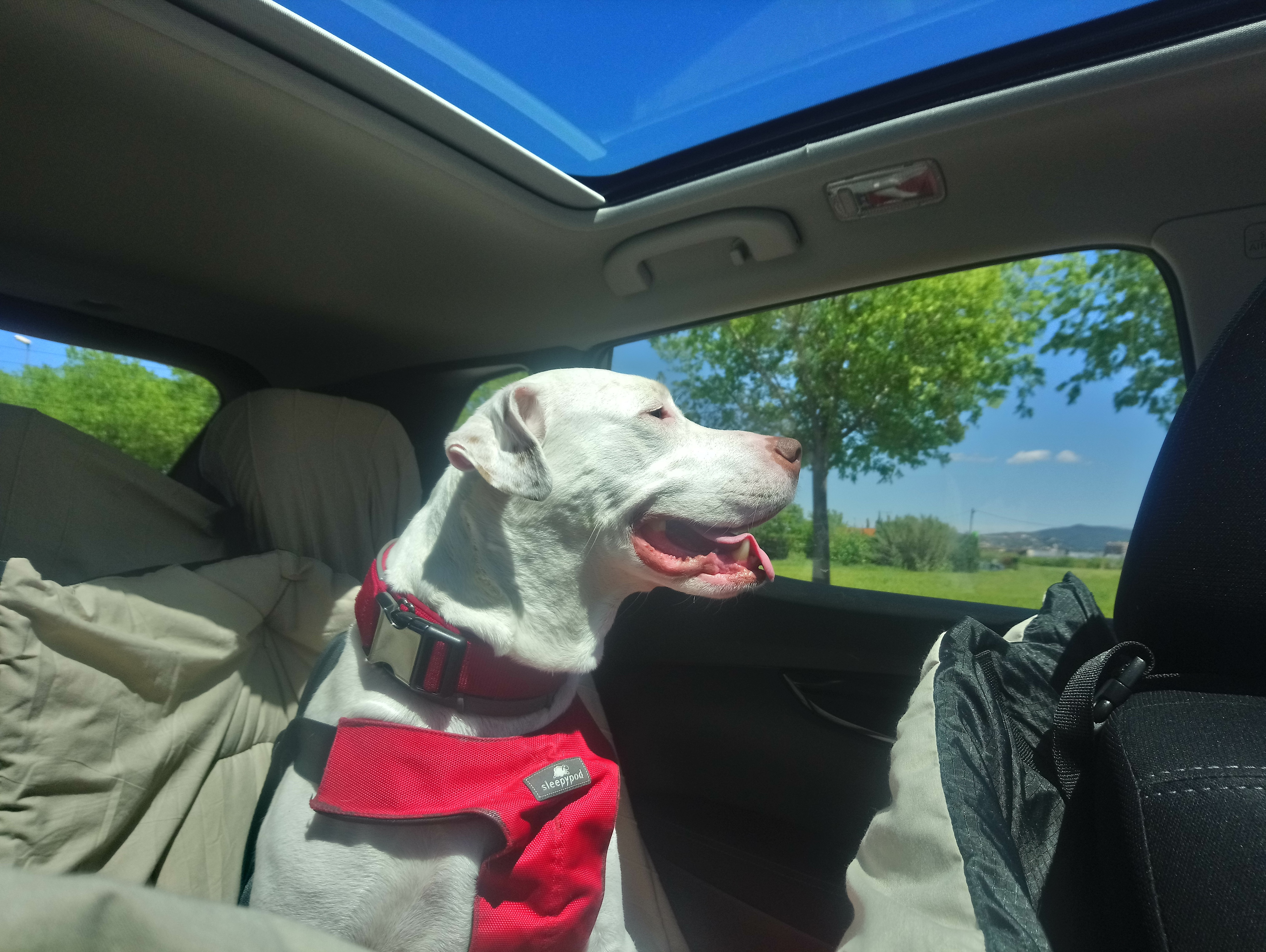
<p><br></p><p><br></p><p>At the Cadaqués Es cau d'en Pinxo veterinary center, we want you all to be able to travel with your pets in the safest way possible. That is why we have made this blog post, with tips and explanations, of the best retention methods that we have found on the market.</p><p><br></p> <h3><strong>Before making any trip</strong></h3><p>You should always check that your pets wear the collar with identification but also that they have a microchip, that their reading is correct and that the associated data to contact you are up to date. Remember all your luggage: spare strap, toys, prizes, water and food, feeders and first aid kit.</p> <p>If you travel far away or cross borders, do not forget their documentation and veterinary history. Check that they have their vaccinations and preventive treatments. It is also advisable to look at the maps of the area and locate the veterinary services in case you need to visit them during the trip.</p><p><br></p> <h3><strong>Travel safely by car</strong></h3><p>For car trips, the highway code obliges us to bring pets in such a way that they do not distract us while driving, but it does not specify anything else.</p> <p>We believe that it is necessary to differentiate between safety to prevent and avoid driver distraction and safety in the event of an accident. Many of the items on the market today to transport pets do not protect in the event of an accident and we need to be aware of them. We must take into account the danger that a bad safety system would represent in the event of an accident: not only does it allow the animal to be projected in any direction, but the person next to or in front of it could be hit. Therefore, a good safety system not only protects the animal but also ourselves.</p><p><br></p> <p>Currently we find many different fastening systems on the market for traveling by car with our pets:</p> <p><strong>Straps that are anchored to the seat belt anchorage itself:</strong> They are a very economical option that restricts the movements of our pet. These straps do not offer protection in the event of an accident.</p> <p><strong>Harnesses:</strong> There are all kinds of harnesses, some are even designed specifically for car travel. Many harnesses that are sold with seals that "guarantee some safety" are actually not safe in the event of an accident, therefore, before buying such a harness, we recommend that you inform yourself and check the certificates on them, as well as the videos of the tests carried out. You should also look at who performs the test, how this test has been designed and who subsidizes it, as there is currently no recognized standard.</p> <p><strong>Carriers: </strong>They have been used for a long time for transporting pets. We need to know that the safest location is on the floor between the front and back seats, limiting its movement as much as possible. If the animal is very large, we will have to put the carrier in the trunk, leaning on the back seat. Many people believe that tying the carrier with the belt is enough to secure their pet, but this should never be done unless the manufacturer of the carrier itself offers you a clear demonstration of the integrity of the carrier in the event of an accident. Most carriers, if they are fastened with the belt in the event of an accident, break and the resulting pieces can injure your animal and/or the rest of the occupants of the vehicle. The carriers that pass the accident tests, in general, do not break and prevent the projection of the animal, but assessing the injuries that the animal could have is a very complicated task to which a viable solution has not yet been found. </p><p><strong>Seats: </strong>As a novelty, some products are also sold that aim to be the equivalent of a child seat, but for now, there are none that have passed the safety tests in the event of an accident.</p> <p><br></p><h3><strong>Our conclusion</strong></h3><p>After reading and evaluating the tests carried out, reviewing the videos and their results, we have decided on a harness to hold Jack (for those of you who do not know it, it is our "public relations"). This harness has proven to be very effective in the event of an accident, even better than carriers that cost 10 times more (and which the manufacturer claims to be the safest method of transport in existence). In addition, we have been aware that on one occasion in which a product of the harness manufacturer failed in an independent test, he went to the test site only 3 hours after being notified, assessed the difference between his own tests and the independent test and proceeded to solve the problem (reinforcing a small part of a cloth carrier) as quickly as to be able to continue with the improved product. Therefore, the involvement of the entrepreneur and the importance that safety gives him, for us, is one more point to take into account in our choice.</p><p><br></p> <p>If you want more information, you can go to our veterinary center and we will answer all your questions.</p>
Go back to news